






Why Is Cheddar Cheese Orange? Annatto, a 300-Year-Old Trick & Wisconsin Pride
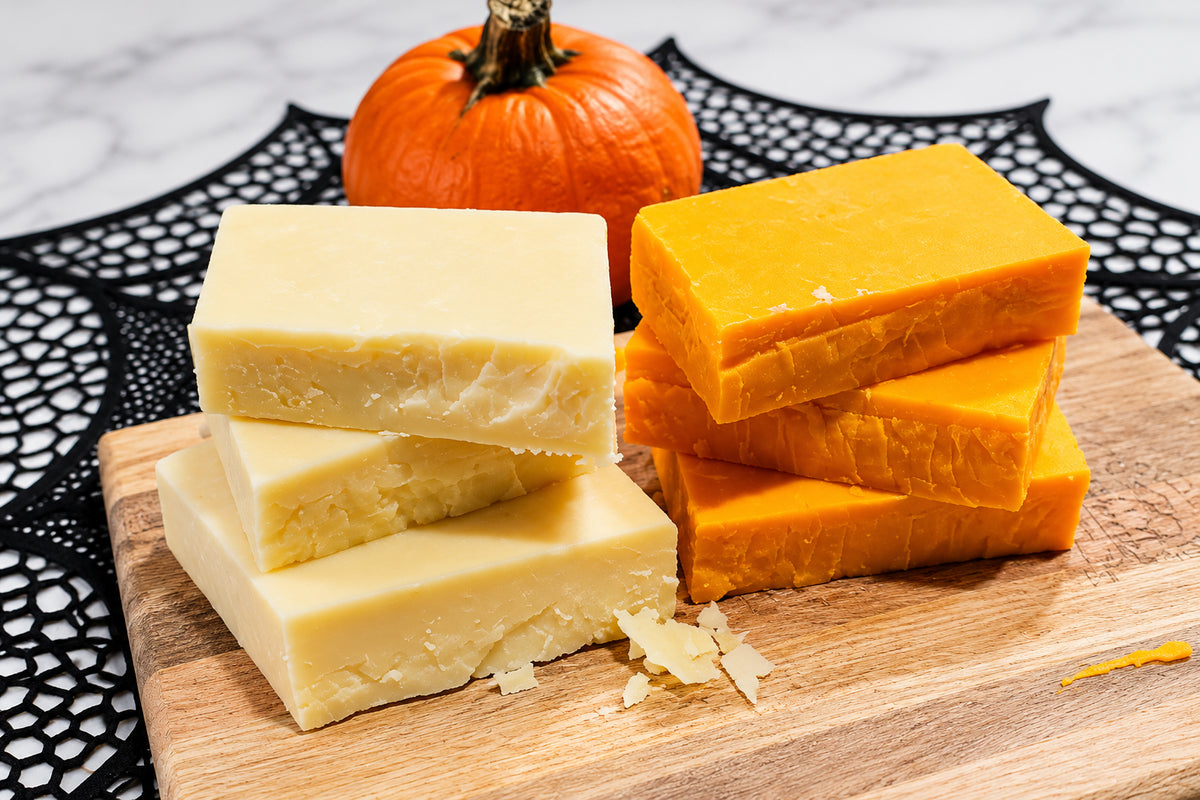
Why is cheddar cheese orange? Because cheesemakers add annatto, a natural extract from achiote seeds, to the milk before the curd forms. Cheddar isn't orange on its own. Left alone it ranges from white to pale yellow depending on what the cows ate, & annatto changes the color without changing the flavor one bit.
We've been selling cheddar in central Wisconsin for four generations, & most of ours is the classic Wisconsin orange, so we get this question a lot. Here's the 300-year-old story behind the color, what annatto is, why some cheddar is yellow & some is pumpkin, which of our blocks are orange & which are white, & the answer to whether any of it changes the taste. For everything else about the cheese itself, our guide to sharp cheddar cheese covers mild to 20-year.
- Orange cheddar is colored with annatto, a flavorless seed extract. Natural cheddar is white to pale yellow.
- The habit started in 1600s England, when makers skimmed the cream for butter & tinted the pale cheese to look rich again.
- Yellow vs orange is just the dose. White means none was added.
- Color has zero effect on flavor. Age & cheesemaking decide how cheddar tastes.
- Our aged reserve cheddars are orange. Our Horseradish & Italian Herb Bruschetta cheddars are white.
Why Is Cheddar Dyed Orange? The 1600s Story
The story, as NPR told it in a 2013 piece on the history of orange cheese, starts in 17th-century England. Summer milk from cows grazing on fresh grass carries extra beta-carotene, which tints the fat & gives cheese a warm golden color. That gold became a mark of quality: rich milk, good pasture, full-fat cheese.
Then some cheesemakers figured out they could skim the cream off the top, sell it as butter, & make cheese from what was left. Skimmed-milk cheese is pale & dull, & buyers noticed. So the makers put the color back with whatever they had: saffron, marigold petals, carrot juice, & eventually annatto, which was cheap, stable & came in on ships from the Americas. The tint made thin cheese look like rich cheese, & it worked well enough that the color outlived the trick. Within a century, orange cheese was a regional signature in parts of England, & the immigrants who carried cheddar-making to the American Midwest brought the orange with them. New England makers mostly didn't bother, which is why Vermont cheddar is famously white & Wisconsin cheddar is famously orange.

What Makes Cheddar Cheese Orange Today: Annatto
So why is cheddar orange today, when nobody's skimming the cream? Habit, & annatto. Annatto in cheese is the same thing it was 300 years ago: a pigment from the waxy red coating on the seeds of the achiote tree, which grows in Central & South America & the Caribbean. The seeds are steeped or extracted, & a few drops of the result go into the vat of milk before the rennet. It takes a tiny amount; the color is strong, & since 100 pounds of milk makes only about 10 pounds of cheddar, the pigment concentrates.
It's a natural color additive approved by the FDA, listed in the color additive regulations as annatto extract (21 CFR 73.30), & it's exempt from the batch certification that synthetic dyes require. It has no flavor at the amounts used in cheese. On an ingredient label it shows up as "annatto," "annatto extract" or "annatto (color)." If a cheddar is orange & the label doesn't list it, look again; there's no other way for cheddar to get there. Cheese coloring beyond annatto is rare: paprika & beta-carotene turn up occasionally, mostly in processed cheese.
Why is cheddar cheese yellow in some brands & orange in others?
Dose, & that's the whole answer. A little annatto makes a buttery yellow; more makes the deep Wisconsin orange; a lot makes the pumpkin shade of a Mimolette. There's no rule for how much a cheddar gets, so every maker picks a shade & sticks to it. Our White vs Yellow explainer, under white cheddar, has the side-by-side if you want the full comparison.

13-Year-Old Super-Sharp Cheddar
Wisconsin orange, aged 13 years. The color came first; the crystals took a decade.
Shop 13-Year CheddarDoes Orange Cheddar Taste Different From White?
Spoiler: no. Same milk, same culture, same cheddaring, same salt, same aging room. Annatto adds color & nothing else. Any flavor difference you notice between an orange cheddar & a white one comes from age, the maker's recipe or the milk, not the tint. Plenty of people swear white cheddar tastes sharper, & plenty of blind tastings have shown that's the eyes talking. We go through the whole thing in cheddar vs white cheddar; the short version is pick the one you like to look at.
Other Orange Cheeses
Colby. Wisconsin-born, mild, almost always annatto-orange. Cheddar's softer cousin.
Red Leicester. The English original: a crumbly, nutty cheese that's been colored since the 1700s.
Mimolette. A French cheese dyed deep pumpkin with annatto, aged until the inside is hard & the rind looks like a cantaloupe.
American cheese. The orange slices get their color from annatto or paprika extract.
Orange cheese, in other words, is a family of white cheeses that someone decided to tint. Every one of them exists in a white version somewhere (& every one of them is better with a cracker).
Cows pass beta-carotene into their milk, which is why even uncolored cheddar leans yellow. Goats & sheep convert it to vitamin A first, which is why goat & sheep cheeses are bright white no matter what the animals ate.

Which Gardner's Cheddars Are Orange?
Our reserve-collection cheddars are the classic Wisconsin orange: the 8-Year-Old Super-Sharp Cheddar, the 13-Year-Old Super-Sharp Cheddar, their 17 & 20-year siblings, & our 3-to-4-year aged cheddar cheese. The orange is annatto, added at the vat before the cheese ever saw an aging room. Years later, the crystals & the crumble come from age; the color is the one thing that was decided on day one.
Our flavored cheddars go the other way. The Horseradish Cheddar & the Italian Herb Bruschetta Cheddar are white, with no coloring in the ingredient list, so the horseradish & the flecks of tomato & basil show. Same milk, same family, two colors, & neither tastes like the other for reasons that have nothing to do with annatto. Orange or white, both want a spoon of Hot Pepper Bacon Jam on the board next to them.


Frequently Asked Questions
What color is cheddar cheese naturally?
Why is cheese yellow?
Is annatto safe?
Is orange cheddar artificial?
Is white cheddar healthier than orange?
Why is Vermont cheddar white & Wisconsin cheddar orange?
Wisconsin Orange, Aged for Years
Family-owned in central Wisconsin. Reserve cheddars aged 3 to 20 years, shipped cold-packed to your door.
Shop Aged Cheeses Free cold-pack shipping on orders $69+ · All 50 states